
Pharmaceutical manufacturing depends on precision, repeatability, and tightly controlled change. OT and industrial automation systems govern essential steps—including batch execution, clean utilities, environmental controls, packaging, and plant-wide monitoring. When these systems are disrupted, the consequences extend far beyond downtime: batch integrity, quality decisions, release timelines, and ultimately patient supply can all be affected.
Cyber risk in pharma stands apart from other industrial sectors because of:
✔ A strong “validated state” mindset, where all changes must be justified, tested, and documented;
✔ Tight coupling between process integrity and data integrity;
✔ Limited tolerance for uncontrolled updates, scanning, or disruptive security tooling;
✔ Heavy reliance on third parties, OEM access, and interconnected production systems.
Arista Cyber helps pharmaceutical manufacturers strengthen OT cybersecurity—without disrupting validated operations. Our approach is engineering-led, risk-based, and anchored to standards such as IEC/ISA 62443, drawing on Purdue-style segmentation and ICS guidance including NIST SP 800-82.
Why the Sector Needs OT Cybersecurity
Pharma plants depend on stable control and reliable evidence. Two risks tend to matter most at the leadership level:
-
1. Loss of availability
A plant can be forced into downtime when shared infrastructure, engineering workstations, or poorly segmented networks allow disruptions to cascade. -
2. Loss of integrity
Unauthorised changes, weak access control, or hidden pathways can create integrity concerns around process data and configuration, which increases investigation workload and regulatory exposure.
Good OT security reduces both by controlling pathways, narrowing trust, and creating dependable visibility into what is happening inside critical zones.
Why Choose Arista Cyber for Pharmaceuticals
Pharma needs security that respects compliance and plant realities. Controls must be enforceable, auditable, and safe to implement around production schedules and validation constraints.
We support that with:
Process-centric OT risk assessments that prioritise consequences to batch integrity, safety, and availability
Segmentation and trust boundaries are designed around critical process areas and high-consequence pathways
Governance and documentation outputs that support audit readiness and controlled change expectations
OT-relevant monitoring and detection through Shieldworkz, focused on abnormal OT behaviour rather than generic IT noise.
Implementation-ready recommendations that align with maintenance windows, qualification needs, and vendor constraints
In practical terms, cybersecurity must protect the ability to operate safely and recover predictably.
Credible OT Incident Reference
The 2017 NotPetya outbreak is often discussed because it shows how fast a widespread event can impact industrial operations. Merck publicly reported major operational disruption and supply impacts during that period. The key lesson for pharma is practical: even when the initial event is "IT-led", weak segmentation and shared dependencies can translate it into production disruption.

The Pharmaceutical Cyber Challenge
Pharmaceutical organisations commonly face a mix of technical and governance constraints:
- ✔ GxP expectations and validated manufacturing, where cyber changes must fit qualification, change control, and evidence requirements
- ✔ Batch and packaging systems that are operationally sensitive, where disruption can trigger scrap, rework, or extended investigations
- ✔ Legacy automation platforms, including controllers and engineering tooling, with limited patch flexibility
- ✔ Interconnected environments, such as MES, historians, recipe management, lab interfaces, and site services
- ✔ Third-party connectivity, including OEM support pathways and contractor access into production zones
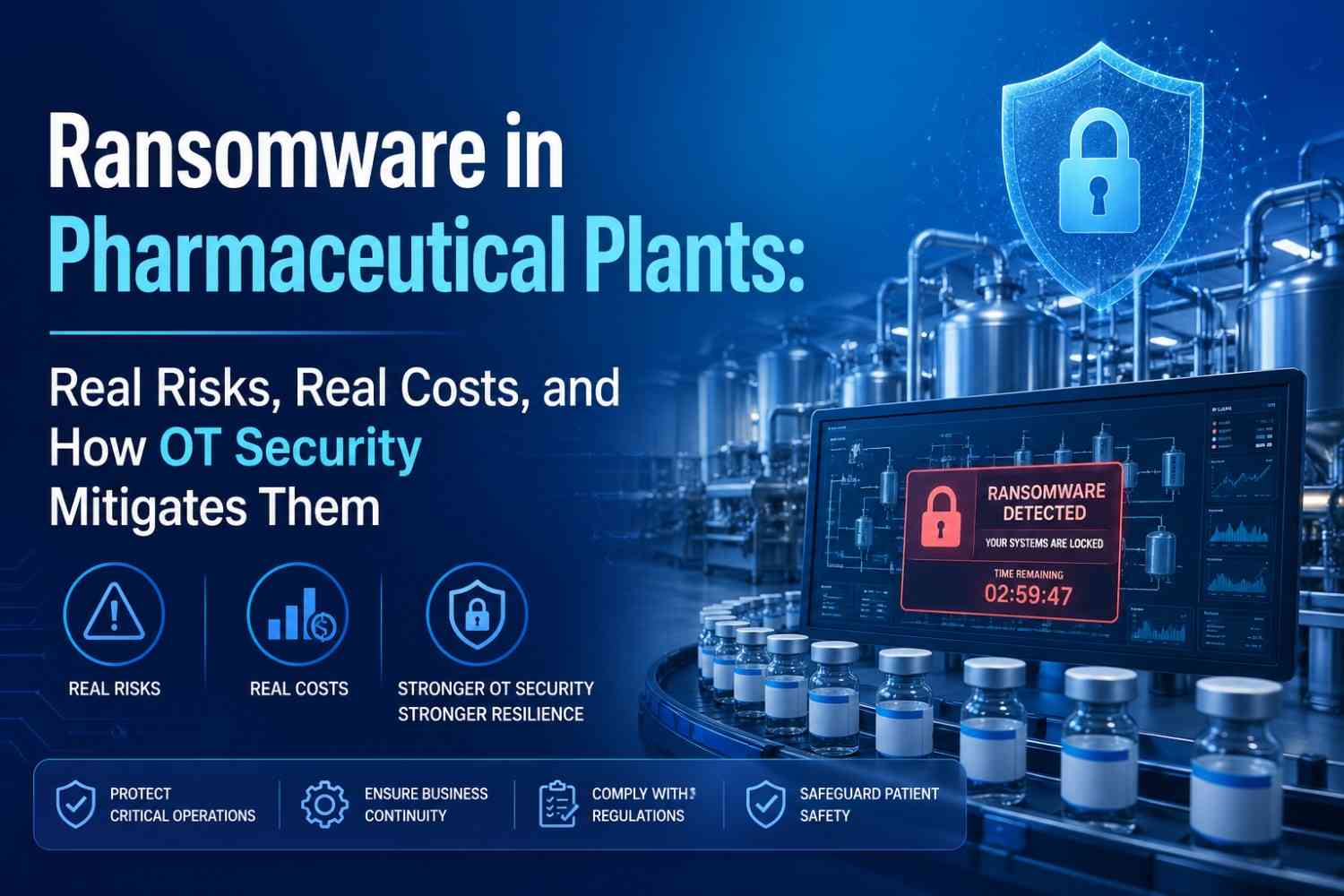
- Ransomware and disruption-focused threats, where even an IT entry point can cause OT downtime via shared services
In pharma, cybersecurity has to protect both operational continuity and product trust. If the business cannot defend its control environment, it also struggles to defend its quality decisions.
How Arista Cyber Supports Pharma Manufacturers
OT Risk & Process Impact Assessments
We establish a baseline that leaders can govern and plant teams can act on. The focus is on exposure pathways with consequences to batch integrity, safety, and availability.
Typical outcomes:
- Verified OT asset visibility for critical areas
- Communication flows and trust boundary findings
- Risk-ranked remediation backlog tied to process consequence
- Executive-ready reporting supporting decision-making
Secure OT Architecture & Segmentation
We design segmentation that matches real production boundaries, not just generic "IT vs OT". This involves defining zones/conduits, tightening access paths, and reducing unnecessary connectivity between critical functions.
Typical outcomes:
- Zone and conduit model aligned to IEC/ISA 62443
- Boundary control requirements and enforcement points
- Remote access pathways defined by role, purpose & approval
- Implementation sequencing aligned to maintenance & validation constraints
OT Monitoring & Threat Detection
Monitoring is tailored to OT protocols and behaviours that matter to production such as abnormal communication paths, unusual engineering activity, or suspicious access into high-consequence zones.
Typical outcomes:
- OT detection use cases mapped to critical conduits/zones
- Monitoring coverage recommendations that minimise operational risk
- Alerting and escalation aligned to plant realities
Governance & Documentation Support
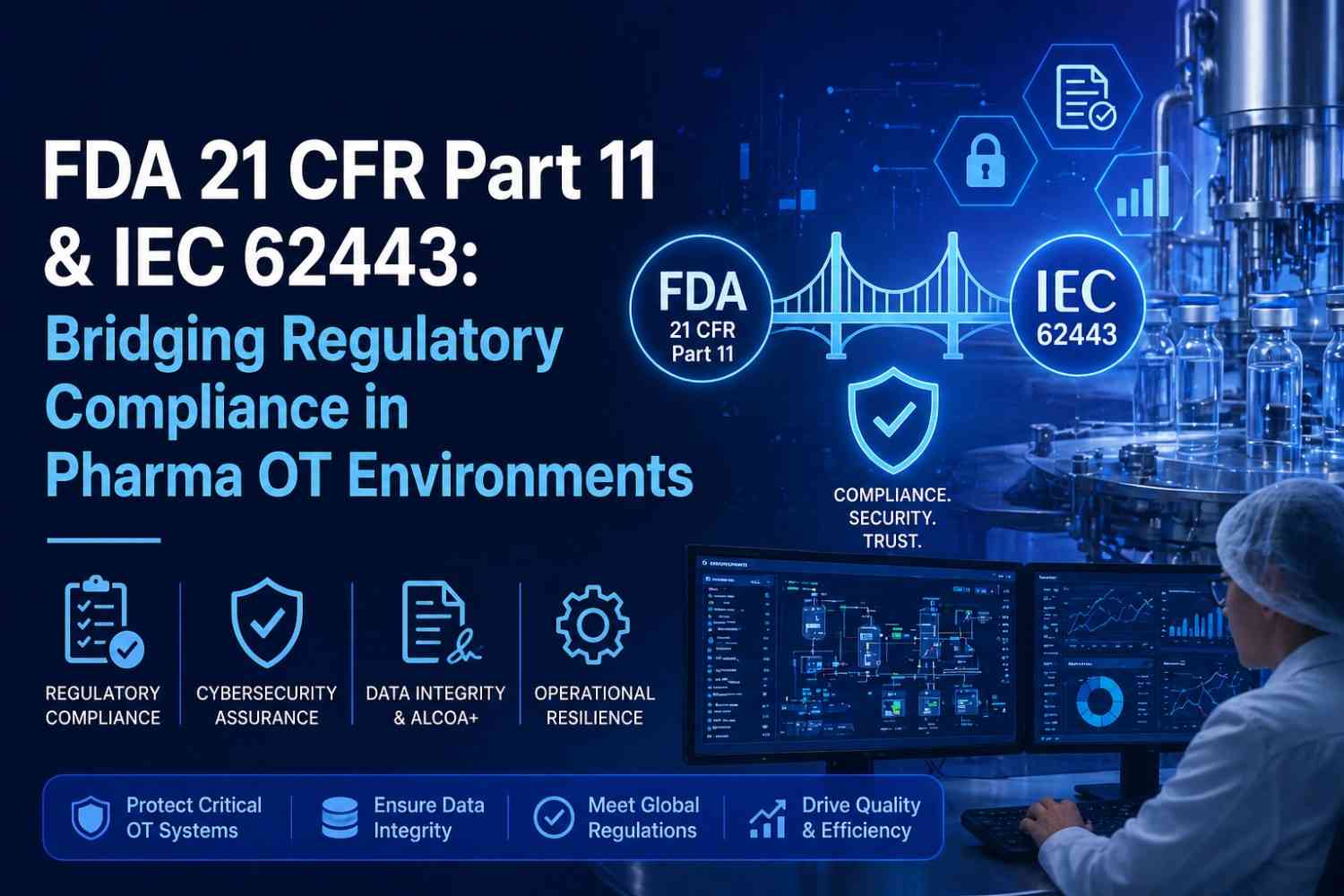
Pharma needs defensible evidence. We produce outputs that support controlled change, audit readiness, and repeatable security operations (without creating paperwork no one can maintain).
Typical outcomes:
- Security requirements and rationale tied to standards
- Evidence-friendly documentation for segmentation & access governance
- Practical procedures for reviews, approvals, and exceptions
Incident Response Preparedness
Response must protect safety and batch integrity. We help define playbooks and decision paths so actions are controlled, consequence-aware and aligned across OT, IT, quality and leadership.
Typical outcomes:
- OT incident playbooks for common scenarios (ransomware, remote access misuse, abnormal traffic)
- Escalation paths and decision roles
- Recovery planning that respects restart and validation considerations
Cybersecurity for Patient-Critical Operations

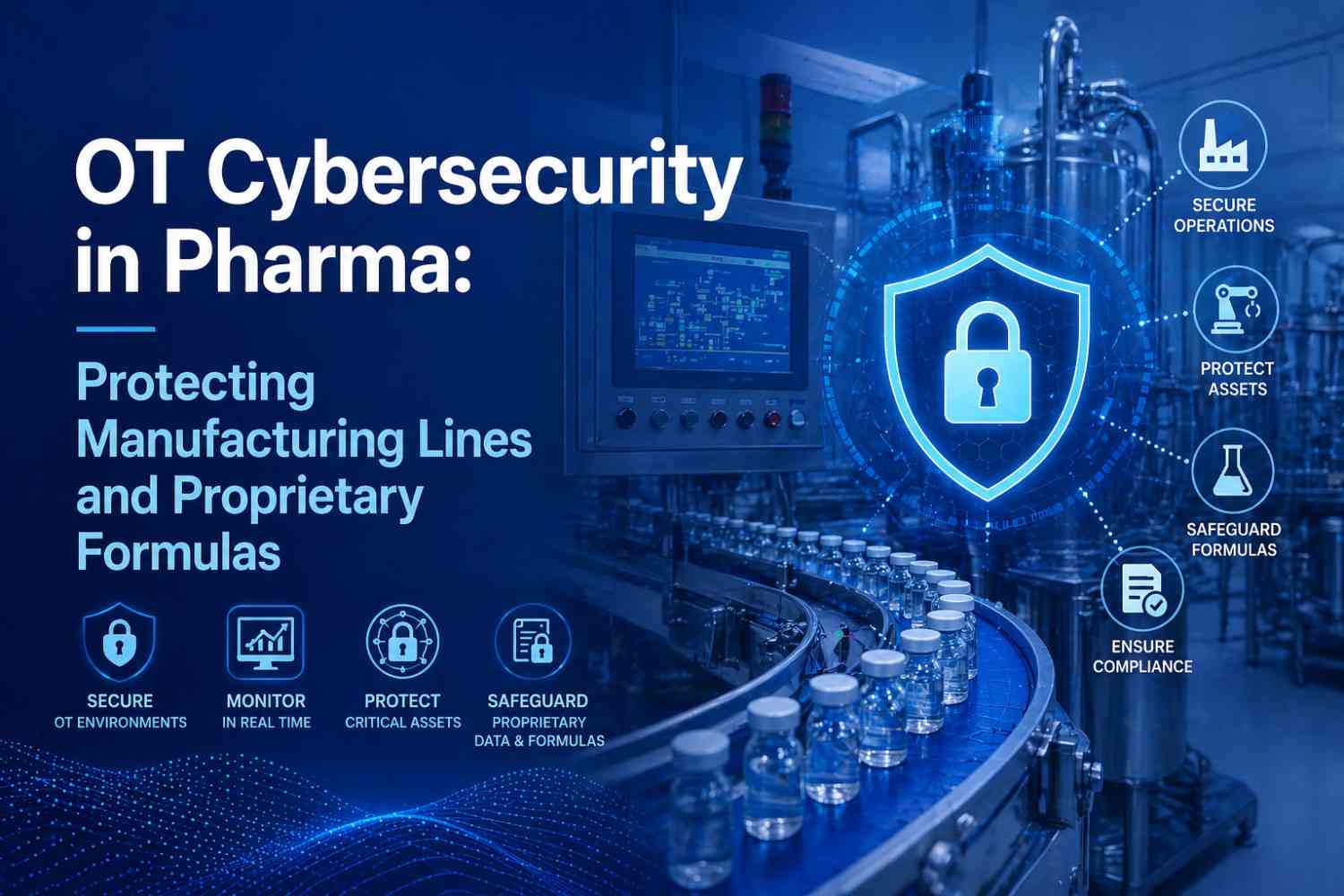
Pharma OT security has to do two things at once: protect production continuity and protect trust in the process and its data. Arista Cyber helps manufacturers build resilience with standards-aligned architecture, operationally safe controls, and governance outputs that stand up to audits and real incidents.







.png)
.png)
.png)
.png)
.png)
.png)
.png)
.png)
.png)
.png)
.png)
.png)